
In this guide, we will talk about many important ideas about the types of bed sheets.
Material Types & Performance Features
The material of a disposable bed sheet is very important. The material makes a big difference in how well the sheet works. Below are some common types and features:
Nonwoven Fabrics
- Nonwoven bed sheets are made by bonding fibers together without weaving.
- They come in many types, such as 폴리프로필렌 그리고 polyester blends.
- They are used for medical disposable bedding because they help with absorbency, breathability및 fluid resistance.
- Many nonwoven sheets also have a moisture barrier that stops liquids from passing through.
- Some nonwoven sheets are made using hydroentangled fibers 또는 spunlace nonwoven technology.
Reinforced Layers & Multi-Layer Constructions
- Some sheets have reinforced layers to make them strong.
- For example, a multi-layer SMS construction is a type where layers are made with absorbent cellulose core 그리고 moisture barrier films.
- These sheets are good for patients with incontinence as they have a high fluid retention capacity.
- They may offer anti-static 그리고 noise reduction properties so that the bed feels more like a normal bed.
- In addition, edge sealing methods 그리고 heat sealing methods help prevent the sheet from tearing.
- Some sheets are low-linting and have tensile strength testing done on them.
친환경 옵션
- Some disposable bed sheets are made with biodegradable materials.
- They can break down by biodegradation processes in a short time.
- These eco-friendly options help reduce waste and are good for facilities that want to be more environmentally friendly.
- They may use compostability considerations and have a high decomposition rate.
Other Key Features
- 통기성: A high air permeability index means a bed sheet can let air through and keep patients cool.
- 흡수성: Some sheets have a high fluid retention capacity that can hold 800ml or more.
- Size & Fit: Proper sheet sizes help secure the sheet on the bed, and fitted disposable sheets are available.
- 편안함: Hypoallergenic options reduce skin irritation. They are skin friendly and offer moisture-wicking benefits.
- Noise Reduction: Some beds sheets are designed to work quietly. This is important because noise decibel ratings 그리고 static dissipation properties can improve sleep.
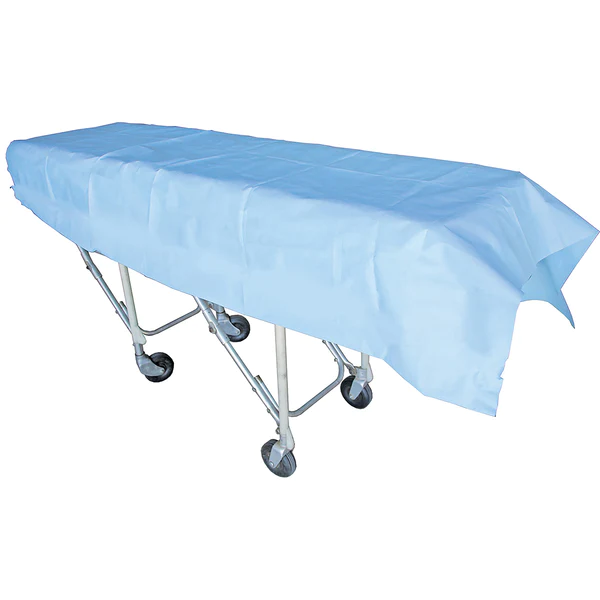
Disposable Sheet Categories
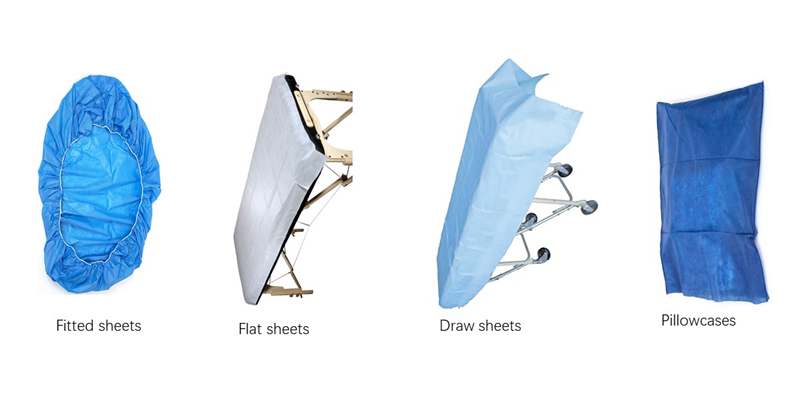
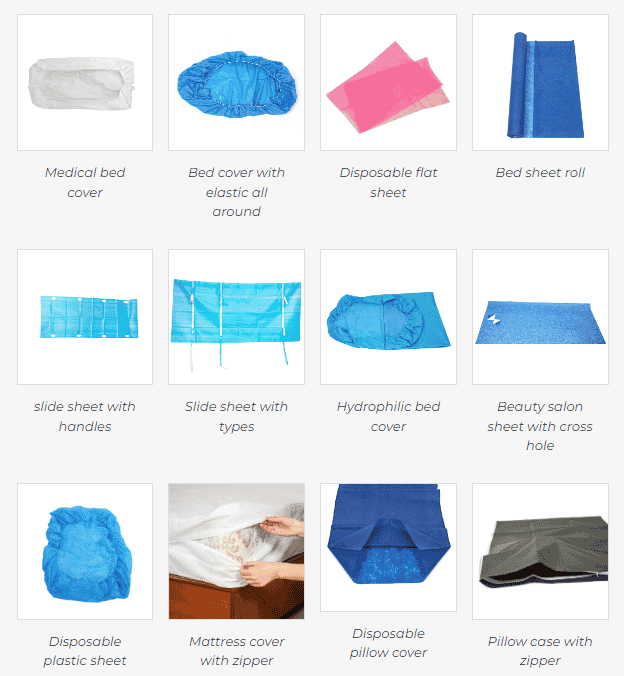
Disposable bed sheets come in different types. We can sort them by design, use case, or absorbency level.
A. By Design
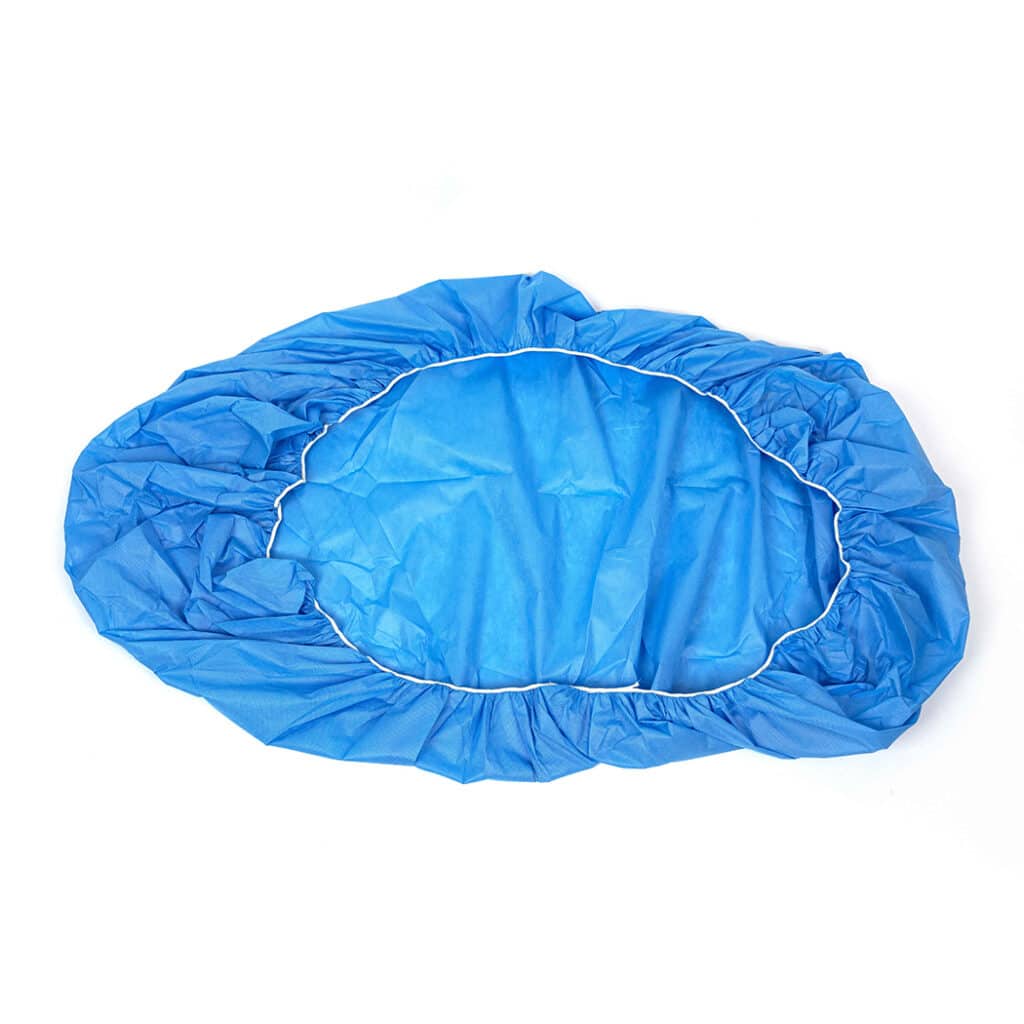
- Flat Sheets vs. Fitted Sheets
- Flat disposable sheets are a soft, loose cover.
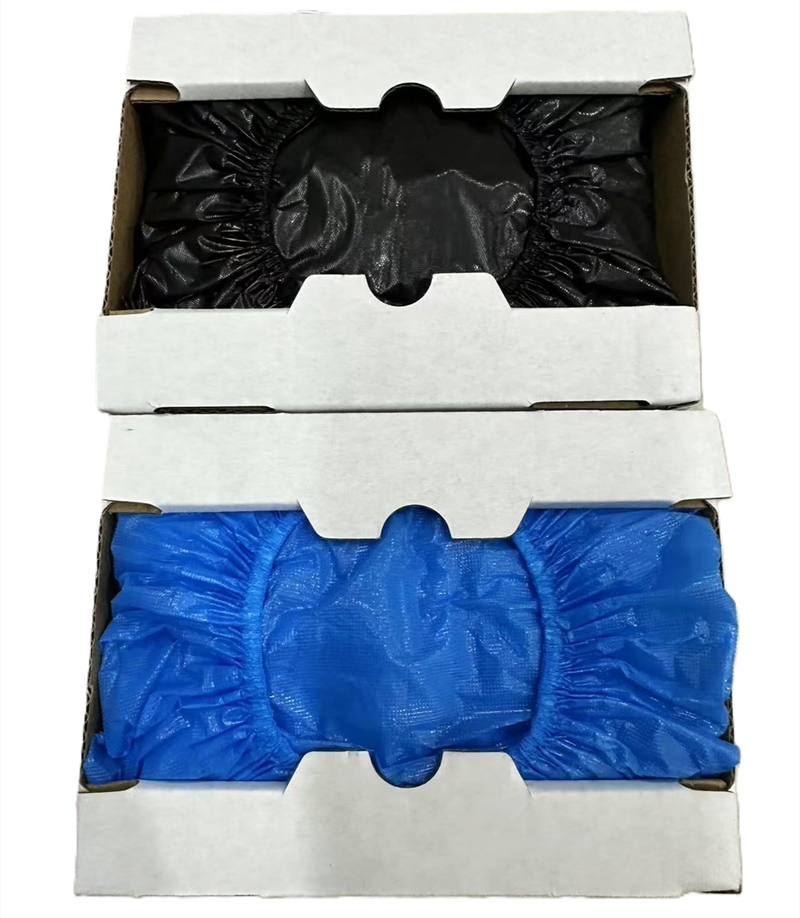
- Fitted disposable sheets have elastic edges that keep them in place.
- Perforated Roll Systems
- These sheets come in a roll with perforation.
- They allow you to tear a sheet quickly. Such designs help in quick-change disposable sheets 그리고 roll-based disposable sheets.
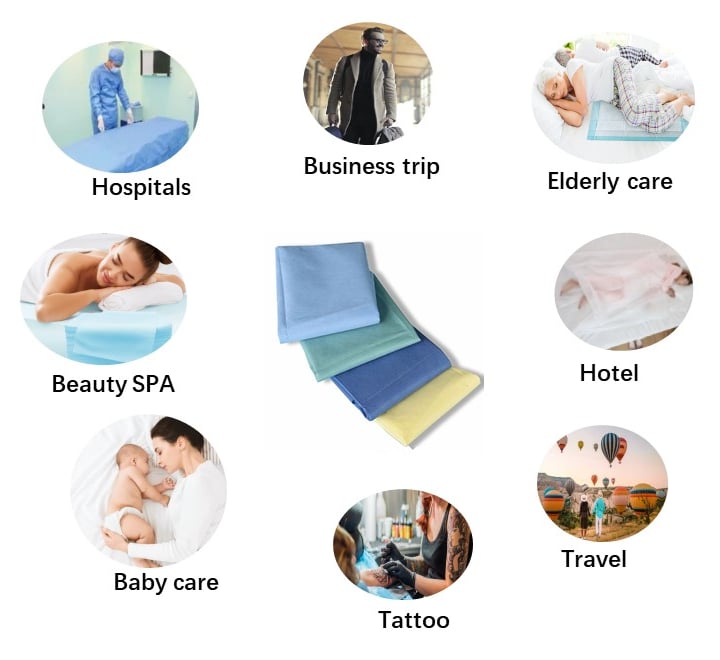
B. By Use Case
- General Hospital Beds
- Many hospitals choose sheets that are designed for general use.
- They are cost effective and good for many single-patient disposable sheets.
- Pediatric and Geriatric Care
- In these cases, sheets must be gentle.
- They use hypoallergenic disposable sheets 그리고 breathable disposable linens.
- Bariatric Care
- Bariatric sheets are made for heavier patients.
- They are usually reinforced, have a high weight distribution capacity, and strong tear resistance.
- Hospice and Comfort Focused Sheets
- These sheets have a soft feel.
- They also reduce skin irritation and have anti-static disposable sheets.
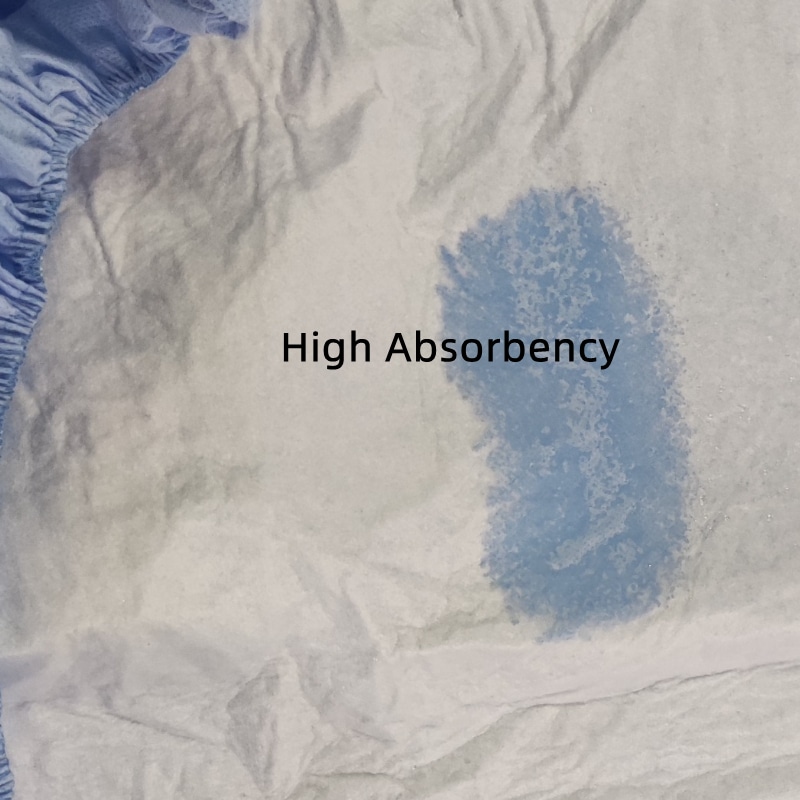
C. By Absorbency Level
- Light Duty
- Examples of light-duty sheets hold about 500ml of liquid.
- Heavy Duty
- Some heavy duty options can absorb 1000ml or more.
- They are made with multi-layer lamination and help reduce mattress stains.
Selection Criteria
When you choose disposable bed sheets, here are key points to check:
- Absorbency Ratings
- Look for high absorbency.
- Some sheets use absorbency core technology and have an absorbent cellulose core.
- 통기성
- Sheets should allow air to flow.
- Factors such as air permeability index 그리고 vapor transmission are important.
- Skin Safety
- Choose hypoallergenic disposable sheets that are latex-free 그리고 skin friendly.
- Size Compatibility
- Make sure the sheet fits your bed.
- Look at size details such as fitted disposable sheets 그리고 disposable flat sheets.
- Noise Levels
- Sheets should be quiet.
- Noise reduction 그리고 static dissipation properties make a difference.
- Cost Per Use & Waste Reduction
- Compare the cost-effective disposable bedding options.
- Consider options with bulk packaging for disposable sheet bulk ordering.
Here are some helpful product comparisons:
- Try our guide on disposable fitted bed sheets for secure fitting.
- See our option for disposable high absorbing bed sheet with fluff pulp for heavy duty absorbency.
- Also check the disposable medical bed sheet for clinical care settings.
These choices show you cost, comfort, and safety.

Comparative Data Table
Below is a table that shows some data and cases on different types of disposable bed sheets. This table is based on surveys and clinical studies.
| Sheet Type | Best For | Key Advantage | Clinical Impact | Facility Feedback |
| Nonwoven PP Flat | General hospital use | Cost-effective, lightweight | 40% faster bed changes | 72% prefer for daily use |
| SMS Multi-Layer | Incontinence care | 800ml absorbency, leak-proof | 55% reduction in mattress stains | ICU nurses report 30% fewer sheet changes |
| Breathable Fabric | Pediatric / Sensitive skin | Air-permeable, hypoallergenic | 28% lower dermatitis cases | Parents rate comfort 4.8/5 |
| 친환경 | Sustainable initiatives | 90% biodegradable in 180 days | 22% lower landfill fees | Eco-conscious facilities adopt 3x faster |
| Bariatric Reinforced | Heavy-duty needs | 150kg weight capacity, tear-resistant | Eliminates 98% of mid-shift sheet failures | Bariatric wards report 50% less waste |
| Perforated Roll | Emergency/triage settings | Space-saving, rapid deployment | Cuts linen setup time by 65% | ERs stockpile for disaster prep |
Data is drawn from a 2023 survey of over 1,500 healthcare facilities and various clinical studies.

Implementation Tips
Here are some easy steps to put your new disposable bed sheets to work:
- Train Your Staff:
- Teach staff about the proper use and disposal of sheets.
- Discuss how to check the absorbency ratings 그리고 fit size.
- Storage Practices:
- Keep your sheets in a dry, cool, and safe place.
- Use proper bulk packaging methods as suggested by your supplier.
- Track Usage:
- Monitor how often the sheets are used.
- Record changes to see if the cost per use is low.
- 피드백:
- Ask nurses and staff about the sheet feel.
- Check for any issues like noise or skin irritation problems.
- Waste Reduction:
- Choose sheets that are biodegradable to reduce landfill waste.
- Use eco-friendly disposable sheets for sustainable practices.
Following these steps will help you get the best performance from your disposable bedding.
결론
Choosing disposable bed sheets is a smart way to keep patients safe and beds clean. With careful attention to the material types, design options, and performance features, you can find sheets that are both cost effective and comfortable. This guide has shared many key ideas—from nonwoven fabrics and SMS constructions to eco-friendly and single-patient specific designs.
By using clear selection criteria and comparing products with data in our table above, you can make a well-informed decision. Follow our simple tips for staff training, proper storage, and waste reduction. Always check for high absorbency, low noise, and skin safety. These features help reduce infection rates and protect patient health.




 한국어
한국어  English
  العربية
  日本語
日本語  ไทย
ไทย  Español
  Português
  Русский
  Français