
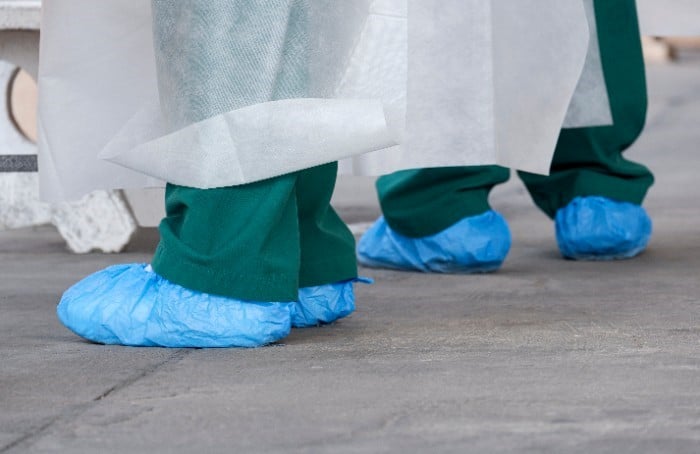
Why do medical staff wear coverings over their shoes? The short answer is safety. Shoe covers help keep places clean. They help protect patients, staff, and visitors. They block dirt, dust, and fluid. They reduce slips. They help stop germs from moving from room to room.
This guide explains the reasons in clear steps. It also shows the main types, how to choose them, and how to use them right.
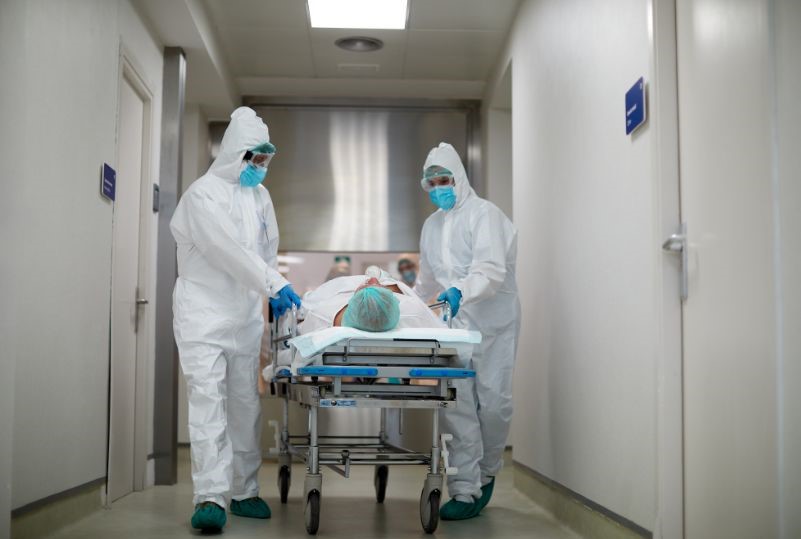
What are shoe coverings?
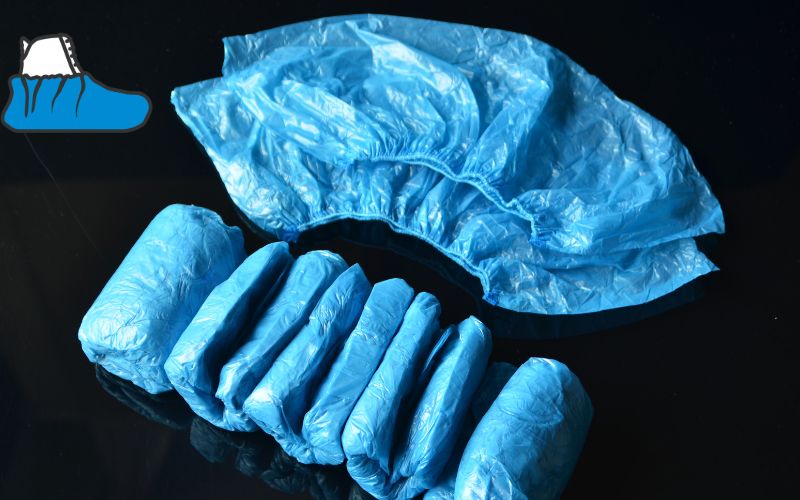
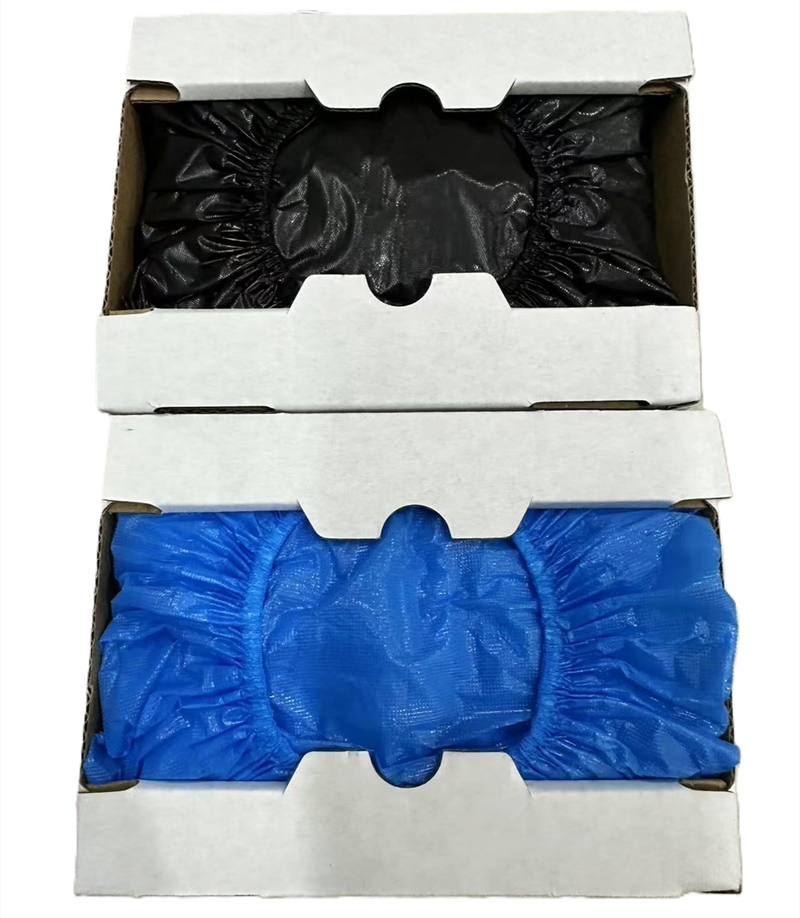
Shoe coverings are single-use barriers. They go over street shoes or clogs. Most styles have elastic at the top. Many have a non slip o non skid sole. Some are impermeable. Some reach the knee like a cubrebotas. They are light, fast to put on, and easy to toss away.
Common names include:
- Shoe covers
- Overshoes
- Boot covers
- Medical booties

Why do medical staff wear coverings over their shoes?
Here are the main reasons teams use shoe covers each day.
- Protect patients
- Stop dirt and dust from the floor
- Cut the risk of germs at the bedside
- Support clean care in high-risk rooms
- Protect staff
- Keep shoes dry from splash and spills
- Lower slip risk with non slip soles
- Add a light barrier in wet zones
- Protect the room
- Help keep floors cleaner
- Reduce time spent on deep floor cleaning
- Support smooth room turns
- Control cross contact
- One-time use supports clean in, clean out
- Fewer germs moved between wards
- Support policy
- Simple steps that all team members can follow
- Clear rules for high-risk zones

Where are shoe covers used?
You will see shoe covers across many care areas.
- Operating rooms
- ICUs and isolation rooms
- Emergency rooms
- Labs and clean rooms
- Maternity and NICU
- Dental and day surgery
- Visitor areas near high-risk rooms
For high-demand rooms, see these options:
- Strong grip in wet zones: disposable non slip hospital shoe covers
- OR-ready designs: medical operating room shoe covers
- Waterproof barrier for splash: disposable waterproof CPE shoe covers
- Guest and vendor entry: safety shoe covers for visitors
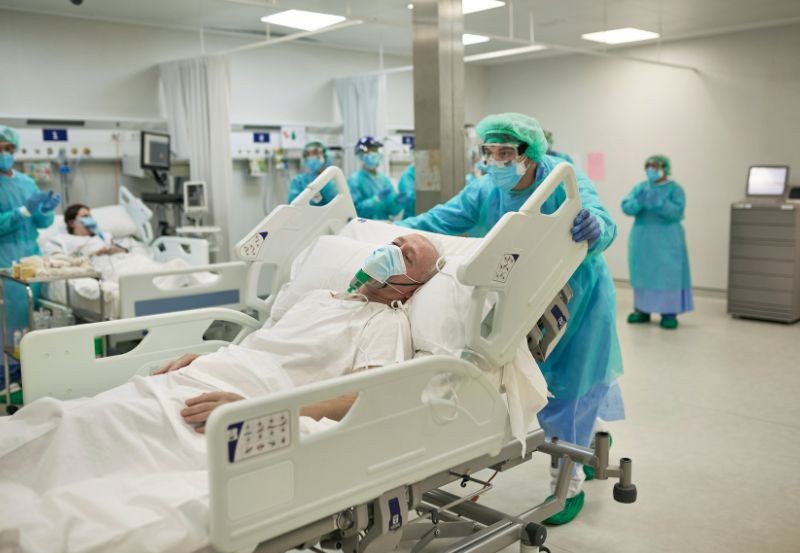
Main types of shoe coverings
Shoe covers come in a few core builds. Each style fits a need.
- PP non woven shoe covers
- Light and breathable
- Good for dry, low-splash areas
- Often used for short visits
- CPE or PE waterproof shoe covers
- Solid fluid barrier
- Smooth or embossed finish
- Great for wet rooms and quick swaps
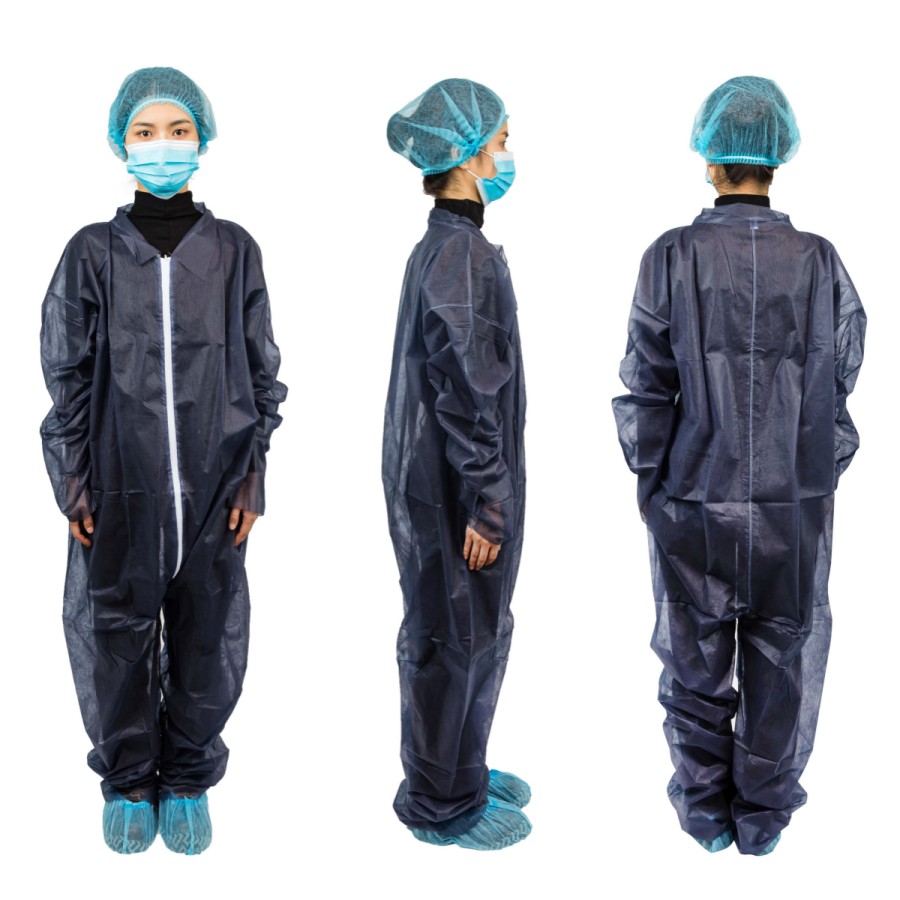
- Microporous shoe and boot covers
- Breathable yet waterproof
- Good for long wear in splash zones
- Often used with full suits
- Non slip or non skid soles
- Printed or PVC tread
- Helps on wet or smooth floors
- Common in OR and ER
- Knee-high boot covers
- Extra length for heavy splash
- Ties or elastic at the top
- Good for cleaning or high-fluid tasks
Key features to look for
Focus on features that match the job and floor.
- Grip
- Look for non slip o non skid soles
- Check tread for smooth or textured floors
- Barrier
- Pick impermeable films for splash areas
- Choose breathable builds for long wear
- Fit
- Elastic top for a snug hold
- Roomy toe box fits bulkier shoes
- Durabilidad
- Thicker film for long or tough tasks
- Reinforced seam on heavy-use styles
- Ease of use
- Fast on and off
- Clear top opening
- One size that fits most teams
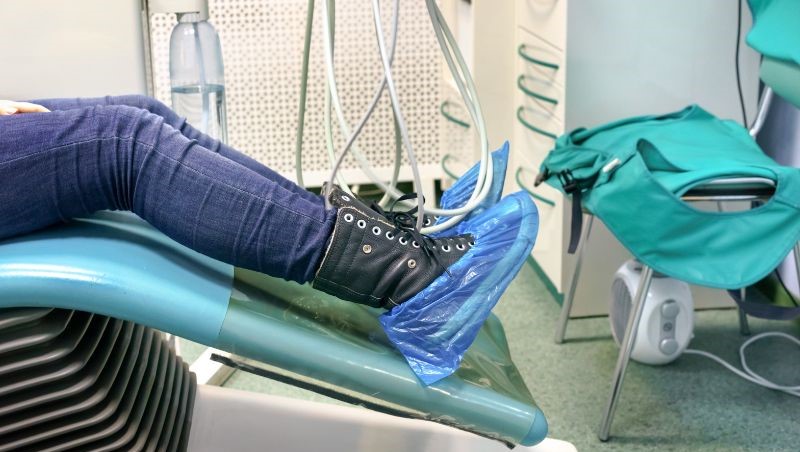
How to choose the right shoe cover
Use this simple plan to match cover to task.
- Check the risk
- Dry, low-risk tasks: PP non woven
- Medium splash: CPE or PE waterproof
- High splash or long wear: microporous or knee-high boot covers
- Know the floor
- Smooth floors: strong non slip tread
- Textured floors: standard tread may work
- Set wear time
- Under 30 minutes: light builds
- Over 30 minutes: thicker films or breathable builds
- Pick the size
- Most styles fit up to large shoes
- Use roomy options for boots or clogs
- Plan the stock
- Place boxes at entry points
- Label by type and size
- Use FIFO to rotate stock
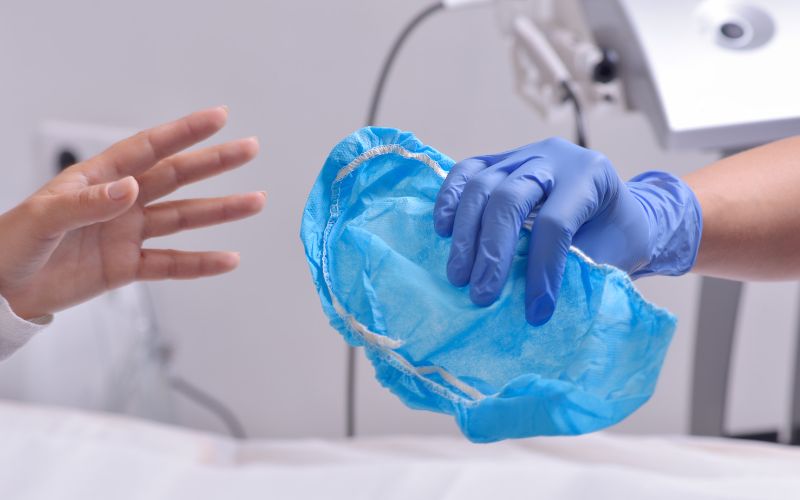
How to put on and remove shoe covers
Good steps lower risk and save time.
- Before you start
- Wash and dry hands
- Pick the right type and size
- Check the cover for tears
- How to put on
- Sit or lean on a clean bench
- Hold the elastic top wide
- Slide the toe in first
- Pull over the heel
- Smooth the cover; check the sole
- How to remove
- Do not touch the sole
- Pinch the back above the heel
- Peel forward and off
- Toss in the right waste bin
- Wash hands again
Post these steps near room entry for all to see.
Best practices for clean rooms
Simple habits help teams every day.
- One cover per use
- Change when you leave the zone
- Always replace if torn or wet
- Keep a clean bench
- Use a seat for donning and doffing
- Wipe the bench on a set schedule
- Stage supplies
- Put covers near doorways
- Stock by shift and room flow
- Color code
- One color for staff
- One color for visitors
- One color for high-splash tasks
- Audit and improve
- Track slips, tears, and swaps
- Adjust types by room need
Preguntas frecuentes
- Do I need shoe covers in all rooms? Not always. Use them in high-risk zones, clean rooms, and when policy says so.
- Are shoe covers slippery? Many styles have non slip soles. Pick the right tread for your floors.
- Can I reuse a shoe cover? No. Use once and toss. This supports clean in, clean out.
- What about visitors and vendors? Give them clear steps and the right covers. Use a set like safety shoe covers for visitors at entry points.
- Can shoe covers protect from spills? Yes. Use impermeable styles like CPE o PE for splash.
Simple setup for your site
Here is a quick way to get started.
- Map your rooms
- List floors, tasks, and splash risk
- Pick two to three types
- One light, one waterproof, and one non slip
- Place supplies
- Doors, anterooms, and clean zones
- Train in 10 minutes
- Show donning and doffing
- Post a step card
- Track two numbers
- Slips reported and tears per 1,000 covers
- Review in 30 days
- Tune the types and stock points
Final thoughts
Now you can answer, why do medical staff wear coverings over their shoes? Shoe covers help protect patients, staff, and rooms. They block dirt and splash. They lower slip risk. They support clean workflows and fast room turns.
Choose covers that match your floors and tasks. Use non slip soles where you need grip. Use impermeable films for splash zones. Stock smart and train simple steps. For the OR, try medical operating room shoe covers. For busy wards, use disposable non slip hospital shoe covers. For wet areas, add disposable waterproof CPE shoe covers. For guests, stage safety shoe covers for visitors at the door.
With the right plan, your team stays safe, your rooms stay clean, and your day runs smooth.




 Español
  English
  العربية
  日本語
日本語  한국어
한국어  ไทย
ไทย  Português
  Русский
  Français